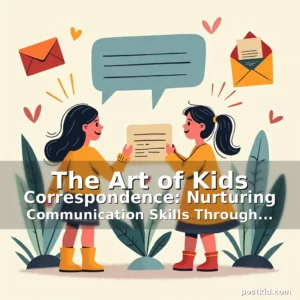
The Art of Kids Correspondence: Nurturing Connection Through Letters in the Digital Age
In an era dominated by instant messaging and social media, the practice of writing letters has become increasingly rare among children. Yet, within the vibrant postkid community—a group dedicated to fostering meaningful connections beyond digital screens—there is a growing movement toward reviving the tradition of kids’ correspondence.
This resurgence isn’t merely nostalgic; it’s rooted in the profound benefits that letter-writing offers young minds. From enhancing literacy skills to cultivating empathy and patience, the act of putting pen to paper provides experiences that screen-based communication simply cannot replicate.
The Historical Roots of Children’s Letter Writing
Kids’ correspondence traces its origins back centuries, serving as both educational tool and emotional anchor for generations past. In pre-digital eras, handwritten letters were primary means of long-distance communication, often used by families separated due to war, migration, or work commitments.
Schools incorporated letter writing into curricula as early as the 19th century, recognizing its value in teaching grammar, composition, and interpersonal communication. This formal instruction laid the foundation for lifelong writing habits many adults still carry today.
Children who participated in regular correspondence developed stronger cognitive abilities through structured writing tasks. Studies from the late 1800s showed improved memory retention when students engaged with written material rather than spoken instructions alone.
The tradition extended beyond education, becoming a vital link between distant relatives. Grandparents would write weekly letters filled with stories and life lessons while parents corresponded with siblings living abroad during wartime periods.
- Cultural Significance: Different societies developed unique styles—from elaborately decorated Japanese origami letters to coded messages used during World War II.
- Educational Value: Schools across Europe integrated epistolary exercises into language arts programs well before modern pedagogy emphasized technology integration.
- Emotional Development: Regular exchange of personal narratives helped children understand diverse perspectives and build emotional intelligence at formative ages.
Modern Relevance of Kids’ Correspondence
While digital communication dominates contemporary youth culture, there remains significant interest in reintroducing traditional letter writing to children’s lives. This renewed attention stems from concerns over declining face-to-face interaction and reduced deep reading comprehension among younger generations.
Studies conducted by the National Literacy Trust indicate that children who engage in regular letter writing demonstrate better vocabulary development and grammatical accuracy compared to peers relying solely on text messaging formats.
Moreover, educators have begun incorporating letter writing projects into STEM curricula, using postal exchanges as practical applications for science experiments and mathematical problem-solving activities.
Parents seeking alternatives to constant screen time are discovering creative ways to integrate letter writing into daily routines, transforming simple note-taking into full-fledged correspondence initiatives.
Rising Interest Among Educators
A survey of K-12 teachers reveals increasing adoption of letter-writing programs in classrooms nationwide. Over 68% of respondents reported implementing weekly epistolary assignments since 2020, citing improvements in student engagement and academic performance.
These classroom-based correspondence efforts often involve pen pal partnerships between schools in different regions or countries. Such international exchanges provide cultural awareness opportunities while reinforcing core language skills through authentic communication scenarios.
Pedagogical research supports these findings, showing that students participating in structured letter writing programs exhibit higher levels of motivation and self-expression compared to those limited to digital platforms.
Fostering Empathy Through Kids’ Correspondence
Letter writing serves as powerful vehicle for developing empathy in children by encouraging them to consider others’ viewpoints and emotions. Unlike fleeting digital interactions, the thoughtful process involved in composing physical mail requires deeper reflection on tone, intent, and impact.
When children write letters to friends, family members, or even strangers they’ve never met, they learn to articulate feelings clearly while being mindful of how their words might affect recipients emotionally.
Psychologists emphasize that this deliberate consideration helps build emotional intelligence—an essential skill set for navigating complex social relationships later in life.
Structured letter-writing programs designed specifically for children include prompts that encourage perspective-taking exercises, helping participants develop greater understanding of people from various backgrounds and circumstances.
Practical Benefits of Kids’ Correspondence
Beyond emotional growth, letter writing offers numerous tangible advantages that contribute to overall child development. These range from improving fine motor skills through handwriting practice to strengthening organizational abilities required for managing ongoing correspondence.
Research published in the Journal of Educational Psychology highlights enhanced executive functioning skills among children regularly practicing cursive writing, which is typically involved in letter composition processes.
Additionally, maintaining consistent letter-writing routines teaches time management principles as children plan ahead for deadlines and organize information logically before sending each piece of mail.
The tactile experience of handling stationery, sealing envelopes, and affixing stamps engages multiple senses simultaneously, creating richer learning environments that support kinesthetic learners particularly well.
Creating Effective Kids’ Correspondence Programs
Designing successful letter-writing initiatives for children requires careful consideration of age-appropriate strategies that make the activity both enjoyable and educational. Younger participants benefit most from guided structures while older students thrive with more autonomy in choosing topics and recipients.
For preschoolers, picture books featuring letter-writing themes can serve as excellent introductory tools. Interactive storybooks where children fill-in-the-blanks create first steps towards understanding basic correspondence mechanics.
Elementary school programs might incorporate themed exchanges such as holiday greetings, birthday cards, or sharing recent accomplishments. Teachers can facilitate peer connections by pairing students based on shared interests or complementary skill sets.
Middle and high school initiatives could explore more sophisticated forms including opinion essays, book reviews, or collaborative storytelling projects that require sustained dialogue between writers.
- Age-Specific Approaches: Tailoring activities according to developmental stages ensures appropriate challenges without overwhelming young writers.
- Thematic Projects: Structured themes help maintain focus and purpose, making letter writing feel less arbitrary and more meaningful.
- Peer Interaction: Encouraging direct communication between letter-writers fosters genuine relationships built around mutual curiosity and respect.
Integrating Technology With Traditional Methods
Contrary to common assumptions, integrating technology doesn’t diminish the value of traditional letter writing—it can actually enhance the experience by providing new tools for creativity and connection. Digital platforms offer innovative ways to supplement physical mail while preserving its fundamental strengths.
Some educators use online portals to track progress and share samples anonymously, allowing students to see examples of effective letter formatting and content organization without revealing personal identities prematurely.
Interactive apps enable children to design personalized greeting cards digitally before printing them out for snail-mail delivery. This hybrid approach introduces technological literacy alongside traditional skills development.
Virtual reality experiences can simulate real-world letter writing scenarios, helping shy or anxious children gain confidence in expressing themselves before attempting actual physical mail exchanges.
Overcoming Challenges in Kids’ Correspondence Initiatives
Implementing effective letter-writing programs requires addressing several potential obstacles that may hinder participation or reduce effectiveness. Understanding these challenges allows caregivers and educators to implement solutions that ensure success for all involved parties.
One common issue arises from differing schedules between pen pals, leading to inconsistent communication patterns that frustrate participants. Establishing clear expectations regarding response timelines can mitigate this concern significantly.
Lack of access to suitable materials presents another barrier, especially for families facing financial constraints. Community organizations often provide free supplies or partner with local businesses for sponsorships supporting such educational endeavors.
Differences in language proficiency pose additional difficulties when connecting children across linguistic boundaries. Providing translation assistance options or selecting bilingual pairings can help overcome these hurdles effectively.
- Scheduling Coordination: Creating flexible guidelines helps accommodate varied availability without compromising commitment levels among participants.
- Resource Accessibility: Ensuring equitable distribution of necessary materials promotes inclusivity and prevents exclusion based on socioeconomic factors.
- Linguistic Support: Offering multilingual resources enables broader participation and enriches cross-cultural understanding experiences.
Measuring Success in Kids’ Correspondence Efforts
Evaluating the effectiveness of letter-writing initiatives involves assessing both qualitative outcomes related to personal growth and quantitative metrics indicating program reach and engagement levels. A multifaceted assessment approach provides comprehensive insight into initiative impacts.
Qualitative indicators include observations about increased enthusiasm for writing, greater willingness to express opinions openly, and noticeable improvements in listening skills following reciprocal correspondence sessions.
Quantitative measures might track frequency of completed letters, number of active participants over time, and feedback scores collected through periodic surveys administered to parents, teachers, and students alike.
Data analysis techniques allow identification of trends suggesting particular aspects requiring adjustment—for example, if certain demographics show lower participation rates despite equal resource availability.
Future Directions for Kids’ Correspondence
As society continues evolving technologically, the future of children’s letter writing will likely involve blending traditional methods with emerging innovations. However, the core values underpinning this practice remain timeless—fostering connection, nurturing creativity, and promoting thoughtful communication.
Advancements in augmented reality could soon transform how we perceive physical mail, potentially adding interactive elements to conventional letter formats without replacing the inherent qualities that make them special.
Ongoing research suggests continued relevance for handwritten correspondence, particularly among youth seeking authentic human connection amidst digital saturation. This trend indicates sustained demand for well-designed letter-writing programs tailored to modern needs.
Educational institutions are beginning to recognize the importance of balancing screen-based learning with hands-on activities that reinforce critical thinking skills through non-digital mediums like letter writing.
Conclusion
The revival of kids’ correspondence represents more than just a return to old traditions—it signifies a conscious effort to cultivate deeper, more meaningful modes of communication in our rapidly changing world.
By embracing this practice, parents, educators, and communities can help shape a generation capable of thoughtful expression, empathetic engagement, and enduring human connection. Let us continue writing letters together, one envelope at a time.

news is a contributor at PostKid. We are committed to providing well-researched, accurate, and valuable content to our readers.